
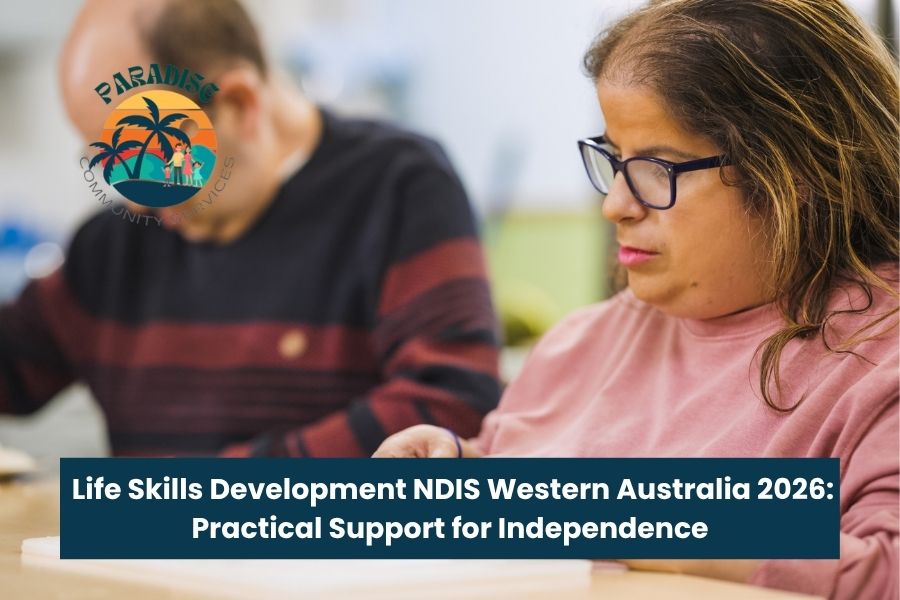
Navigating the National Disability Insurance Scheme (NDIS) in Western Australia often feels like a full-time job. As we move into 2026, there has been a significant shift in how the scheme operates. The focus has moved away from simply “maintaining” a lifestyle and toward active life skills development in NDIS WA. For participants living in Perth or regional WA, this is a major win; it means the system is finally prioritising your right to live as independently as possible.
At Paradise Community Care, we know that independence isn’t a one-size-fits-all goal. For one person, it’s the confidence to navigate the Transperth train line to get to work. For another, it’s mastering a weekly grocery shop or managing a personal budget without feeling overwhelmed. This guide looks at how you can use your NDIS funding this year to build the practical, real-world skills that make a difference to your daily life.
What is Life Skills Development under the NDIS?
In the current NDIS framework, life skills development is officially categorised under Capacity Building. Specifically, you will find it in your plan under Development of Daily Living and Life Skills.
It is helpful to understand the professional distinction here:
- Core Supports are generally about someone doing a task for you (like a cleaner or a meal delivery service).
- Capacity Building is about someone working with you to teach you how to do those tasks yourself.
The primary goal of life skills training for adults with disabilities is to reduce your reliance on 1:1 support over the long term. By investing in these skills now, you aren’t just getting through the day; you’re setting yourself up for a future where you are in the driver’s seat.
Why Person-Centered Life Skills Support is the Key
The secret to any successful training is making sure it actually matters to the person doing it. This is why person-centered life skills support is the gold standard in 2026. If a training program is boring or irrelevant to your life, you won’t stick with it.
Starting with Your Goals
A quality provider like Paradise Community Care doesn’t use a generic checklist. We start with your NDIS goals. If your goal is “to be more active in the community,” your independence training Perth might focus on:
- Public Transport Mastery: Learning the details which define Joondalup and Mandurah rail operations.
- Financial Literacy: Students develop their ability to use debit cards safely while they learn fundamental budgeting principles.
- Social Communication: The ability to order coffee and ask for directions develops through practice in active shopping areas of Perth
Learning at Your Own Pace
Everyone learns differently. Some people thrive in a small group where they can pick up tips from their peers, while others prefer the focused attention of 1:1 support. A professional person-centered approach develops your learning methods which help you learn at your own speed while feeling confident about your abilities.
4 Focus Areas for Building Daily Living Skills
Our approach to achieving independence centers on four essential domains. Independent living requires these fundamental components to function throughout daily life.
1. Domestic Independence (The Home Base)
Your home should be a place where you feel in control. Daily living skill building in the home often includes:
- Healthy Meal Prep: Learning to shop for fresh ingredients at local WA markets and cooking nutritious meals safely.
- Household Management: Mastering the washing machine, vacuuming, and keeping your living space tidy and hygienic.
- Personal Safety: People need to learn both home security methods for nighttime and emergency response procedures.
2. Community Access and Mobility
Western Australia is a massive place, and being able to get around is key to freedom.
- Travel Training: A major part of independence training Perth is mastering the Smart Rider system and feeling safe on buses and trains.
- Social Confidence: People develop their social skills through practicing socialising at banking facilities, post office locations, and public libraries.
- Navigating Local Events: We assist you in planning your activities and organizing your time from the Perth Royal Show to local community events.
3. Financial and Administrative Skills
Managing boring stuff is actually the secret to staying independent.
- Budgeting: You will learn to track your spending, which enables you to pay your bills while maintaining funds for your preferred activities.
- Banking Safely: The ability to recognize potential scams and operate banking applications securely stands as a critical competence required in 2026.
- Organising Life: The process of learning to operate a digital calendar or diary system enables users to schedule their doctor and therapy sessions.
4. Health and Digital Literacy
The year 2026 requires people to maintain their health while staying connected with others.
- Self-Care Habits: Establishing exercise programs and developing proper sleeping patterns.
- Assistive Tech: People will acquire skills to operate smart home systems which include Alexa and dedicated applications that assist with everyday responsibilities.
- Online Safety: Users must learn to navigate social media platforms and the internet while protecting their personal information.
Finding Independence Training Perth: The Local Advantage
When you search for NDIS home care providers near me, you’ll see plenty of big national names. However, there is a massive benefit to choosing a local Western Australian provider.
We Know the WA Landscape
A local provider knows the Transperth routes, the local councils, and the community hubs that are truly accessible. We know the local employers who are disability-friendly and the best places in Perth to practice social skills. We aren’t managing your roster from an office in the Eastern States; we are right here in the community with you.
Professional Oversight
High-quality life skills training for adults with disabilities should be overseen by professionals who understand the NDIS Quality and Safeguards Commission requirements. This ensures that while the training is practical and “human,” it is also safe and follows the highest industry standards.
How to Get Life Skills Support in Your NDIS Plan
If your current plan doesn’t have enough funding for life skills development in NDIS WA, you can request it at your next review. Here is how to make a strong case:
- Focus on the Outcome: Don’t just ask for “hours.” Explain the result. For example: “I want to learn to catch the bus so I can go to my volunteer job without needing a support worker to drive me.”
- Use Evidence: A report from an Occupational Therapist (OT) can show where your skills are currently and how training will help you improve.
- Talk About Sustainability: The NDIA loves to see that a participant is becoming more independent. Explain how learning a skill now will actually reduce your need for high-cost 1:1 support in the future.
The Paradise Community Care Difference
At Paradise Community Care, we don’t believe in cookie-cutter support. Our approach to life skills development in NDIS WA is built on being practical and respectful.
- We Keep it Real: We don’t sit in a classroom. If you’re learning to shop, we go to the shops. If you’re learning to travel, we get on the train.
- We Are Patient: Learning new things takes time. We provide just enough help, stepping in when you’re stuck but stepping back to let you try it yourself.
- We Are Local: We are Western Australians supporting Western Australians. We care about our community because we live here, too.
Frequently Asked Questions
Is life skills training just for young people?
Not at all. We provide life skills training for adults with disabilities of all ages. It is never too late to learn a new skill that makes your life easier.
Can I do my training in a group?
Yes. Group training is a great way to meet new people in Perth while you learn. Many participants find it more fun to practice cooking or social skills with a few mates.
What if I live in regional WA?
We do our best to support people across the state. Contact us to see how we can bring our services to your local area or provide support via a mix of in-person and digital sessions.
Conclusion: Take Control of Your Future
The NDIS participants who live in WA will achieve their independence objective which they need to accomplish by 2026. Through targeted life skills development NDIS WA, the path from needing help to being independent becomes a reality.
Independence isn’t about doing everything perfectly on your own; it’s about having the skills and the confidence to choose how your life is lived. Every new skill you master is a win for your future.
Are you prepared to begin developing your independent life skills?
If you want to work with a team that sees you as a complete person who demands personalized treatment, let’s start talking. Our company provides a simple process which includes basic questions to understand your desired outcome and our methods to assist you in achieving that goal.
Contact Paradise Community Care Today